
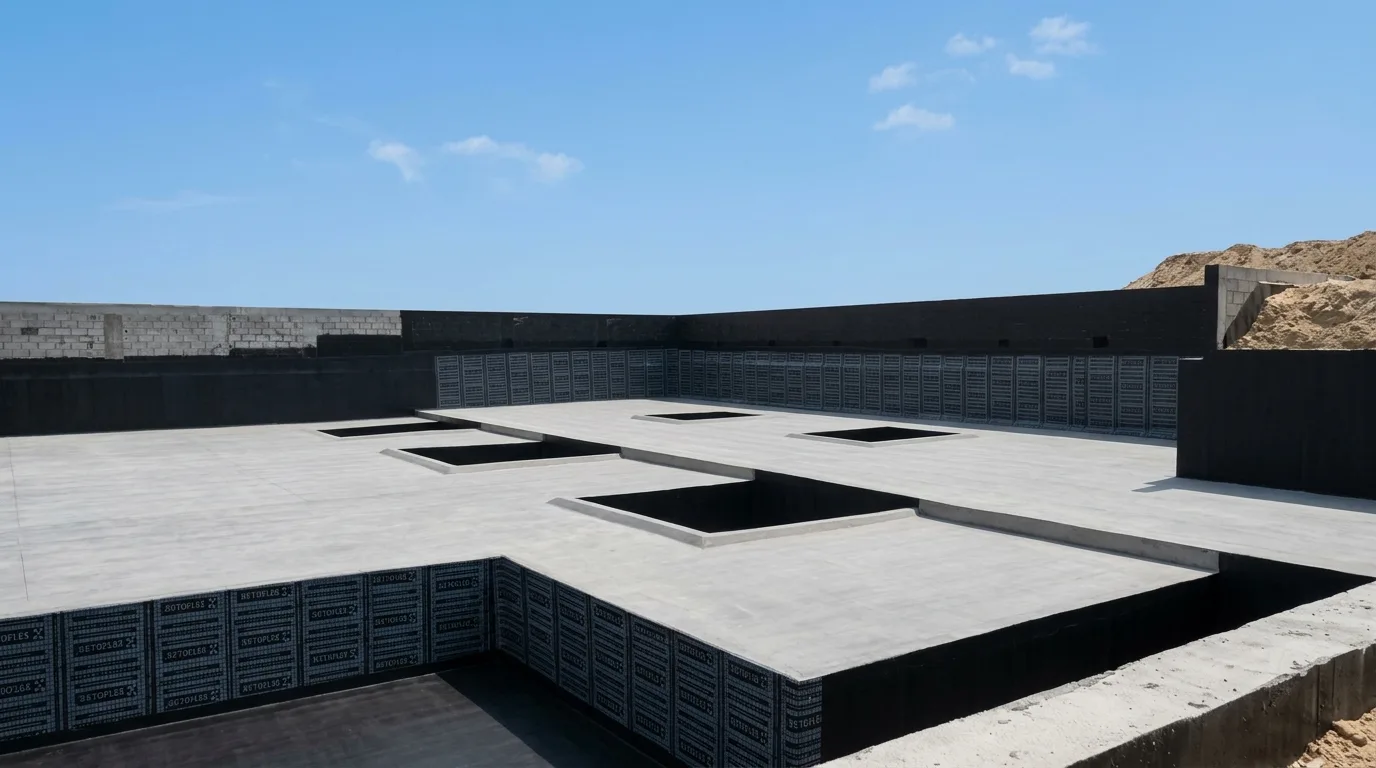
Advanced Sub-Structure Waterproofing: Protecting Concrete Against GCC Salinity
Foundations and basements of buildings in the UAE and the wider GCC region face unique, highly aggressive geological challenges. With coastal locations presenting high groundwater tables and elevated soil salinity levels, the selection of premium chemical waterproofing systems becomes critical to the structural integrity and lifespan of the concrete.
The Double Threat: Soil Salinity & Water Table Dynamics
Groundwater in the GCC often contains extremely high concentrations of chloride and sulfate ions. When concrete comes in contact with these elements without an impermeable barrier, degradation begins immediately:
- Chloride Attack: Chloride ions penetrate the concrete pores and reach the embedded steel reinforcement. Once the threshold concentration is exceeded, the protective passive oxide film on the steel is destroyed, leading to rapid localized corrosion, rust expansion, and concrete spalling.
- Sulfate Disintegration: Sulfates react chemically with the aluminate compounds in hydrated cement paste, forming ettringite. This reaction causes volume expansion, internal cracking, loss of cohesion, and ultimate disintegration of the concrete matrix.
Osmotic Pressure & Moisture Vapor Transmission (MVT)
High underground temperatures, coupled with solar heating of the building envelope, drive moisture molecules upwards through the concrete slab. This moisture vapor transmission carries dissolved salts into the concrete structure, recrystallizing under the surface and causing severe mechanical stress. Standard waterproofing coatings are easily delaminated by this negative-side osmotic pressure.
"Sub-structure waterproofing in coastal GCC locations is not a secondary building layer—it is the foundational defense line. A single compromise can lead to structural steel corrosion that is extremely expensive and technically complex to remediate."
— R&D Dept, Geobit Group of Companies
The Engineered BETOFLEX® System Solution
Geobit Group’s signature product brand, BETOFLEX®, offers a multi-layered chemical and mechanical solution designed to withstand these conditions and comply with international standards (ASTM / BS EN):
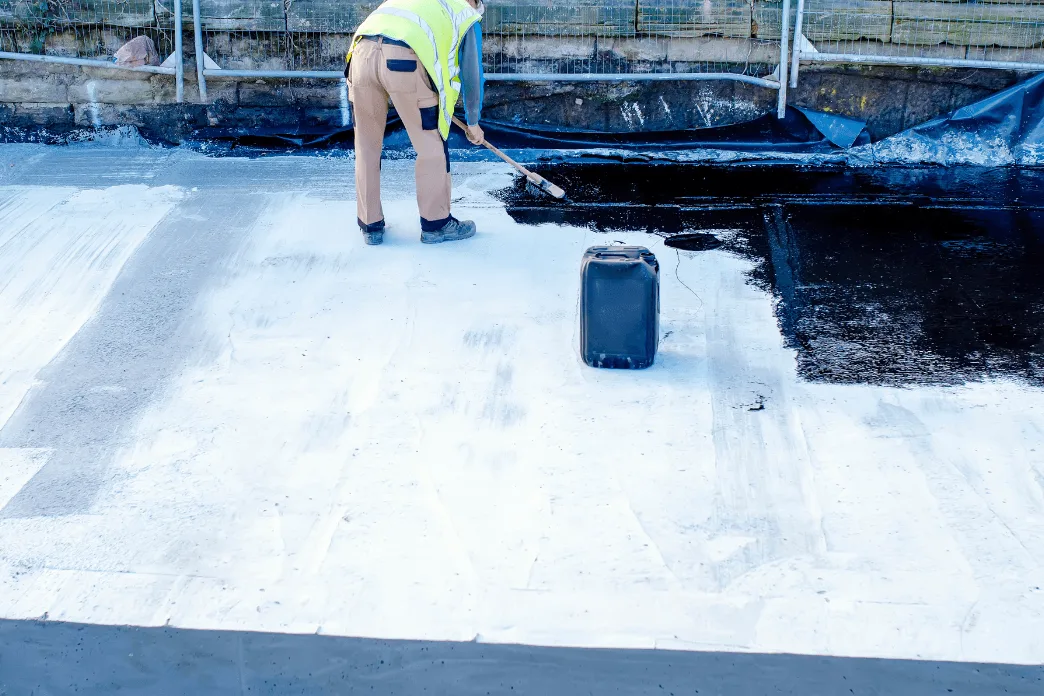
- BETOFLEX® Epoxy Primer: A deep-penetrating moisture-tolerant primer that seals concrete capillaries and creates a high-adhesion base.
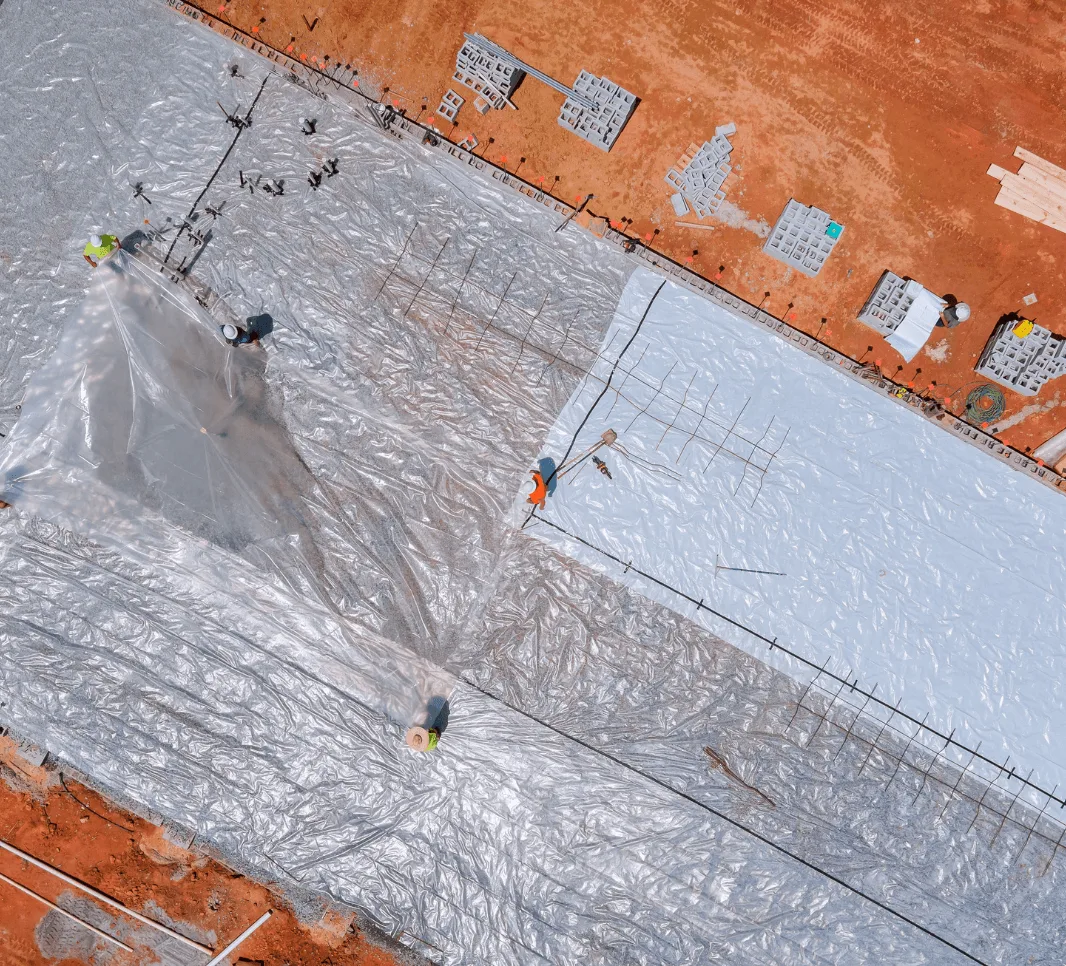
- Pre-Applied HDPE Membranes: Fully bonded high-density polyethylene sheets that mechanically key into the wet poured concrete, preventing any lateral water migration or tracking between the membrane and the structure.
- Seamless Liquid Polyurea Barriers: Cold or hot-applied elastomeric coatings that cover complex geometries, pile heads, and structural construction joints without seams or joints.
Engineering Guidelines & Quality Control
A successful waterproofing application relies heavily on site quality control. Geobit Group advocates a comprehensive three-step approach: detailed CAD joint detailing, surface preparation inspection to ensure concrete humidity is below 4%, and post-application testing. By combining premium chemical engineering with strict site advisory support, Geobit ensures infrastructure durability that stands up to GCC climates.
Recent Posts