
Submersion & Potable Water Quality Challenge
Water storage structures require waterproofing systems that are permanently submerged, resistant to constant hydrostatic pressure, and chemically stable. For potable water reservoirs, the primary concern is the prevention of chemical leaching, bacterial growth, and contamination, which must comply with strict food-grade and public health standards. Water tanks also experience structural expansion and cracking under varying load conditions.
Application Selection Guidance
Specify Geobit non-toxic, food-grade 2K cementitious coatings or specialized polyurethane lining systems for internal potable water surfaces. These systems conform to ASTM and BS EN standards for contact with drinking water. For external positive-side protection, apply rubberized bitumen or cementitious coatings to prevent groundwater ingress. Concrete joints must be treated with food-safe PVC waterstops or swellable hydrophilic profiles.
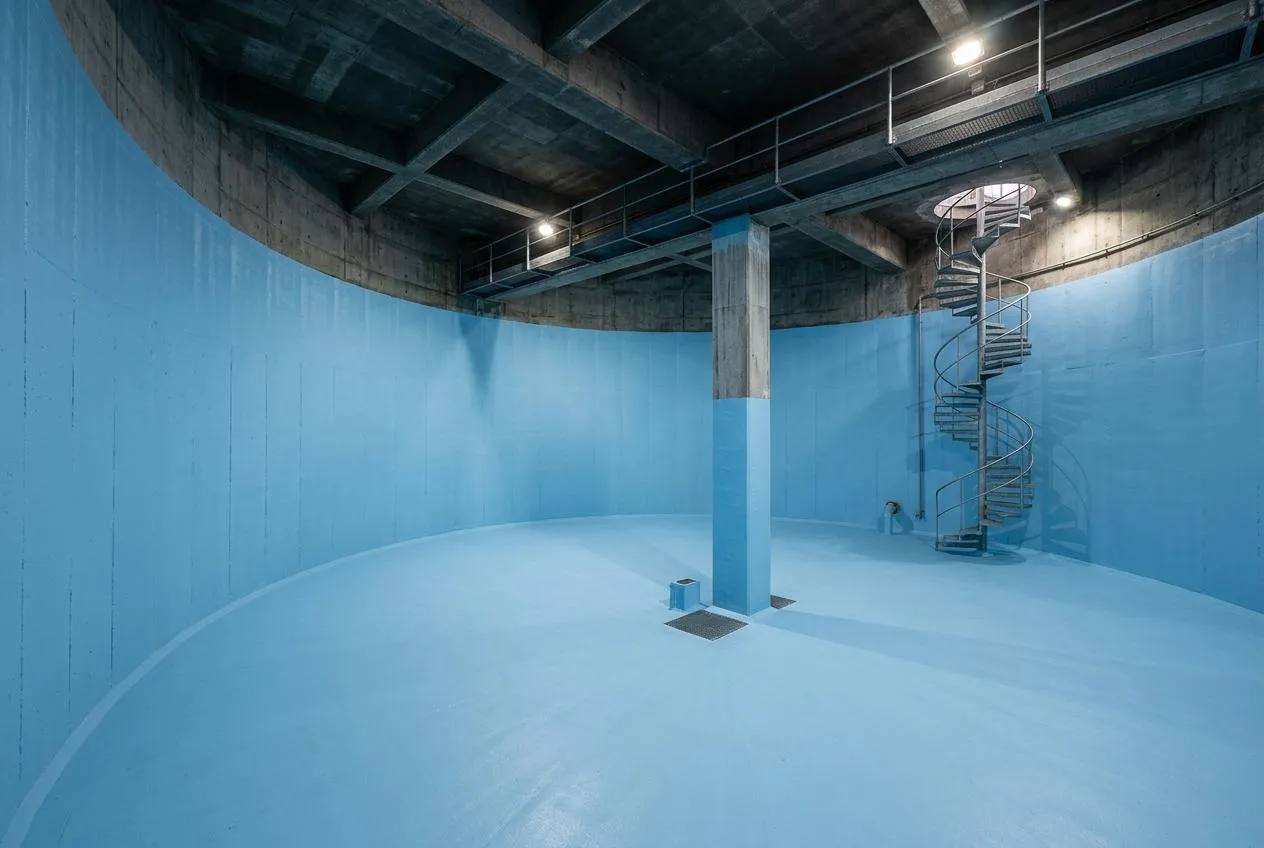
Apply high-performance anti-corrosive epoxy coating (Betocoat Epoxy / Betoprime EP) or non-toxic potable water certified lining (Betoflex CM 588) over sandblasted steel structures, pipelines, and concrete water tanks.
Spray pure elastomeric polyurea coating system (100% solids, rapid curing <10 seconds) for heavy-duty commercial roofs, bridge decks, and high-traffic deck applications.
Embed high-tensile extruded PVC waterstops (Betostop ICJ/ECJ/IEJ/EEJ) into concrete expansion and construction joints during pouring to stop high hydrostatic water ingress, and reinforce internal corners with fiberglass mesh (Betotec Mesh 65).
Related Material Families
Evidence & Case Studies
Specification Hubs
Matching System Products & Functional Roles
Request a system specification for your project
Request a direct calculation, material sample board, typical submittals, or project design validation for this assembly.
Request Technical Assistance